
Denver County Court Traffic Records
Denver Traffic Court Records are managed by Denver County Court, which operates separately from Colorado's state court system. The city and county of Denver share the same boundaries. Traffic violations in Denver go through the county court's dedicated traffic division. Records include citations, hearing schedules, and case outcomes. The court maintains a public portal for online access. You can search cases, pay fines, and check court dates.
Denver County Court Quick Facts
Denver Traffic Court Records Location
The Denver County Court handles all Denver Traffic Court Records through two main locations. The court operates independently from other Colorado courts. This means Denver has its own procedures. The traffic division processes thousands of cases yearly. Records are available both online and in person. The public portal offers convenient access.
Traffic and civil cases are heard at the Bannock Street location. Criminal and municipal cases go to the Colfax Avenue courthouse. Know which location handles your case. Call the appropriate number before visiting. This saves time and frustration. Both locations have public access terminals.
| Court | Denver County Court |
|---|---|
| Traffic/Civil Address | 1437 Bannock St., Denver, CO 80202 |
| Criminal/Municipal Address | 520 W. Colfax Ave., Denver, CO 80204 |
| Traffic Phone | 720-865-7840 |
| Criminal Phone | 720-337-0410 |
| Records Email | coradatarequests@denvercountycourt.org |
| Website | denvercountycourt.org |
| Public Portal | public.denvercountycourt.org |
The public portal lets you search Denver Traffic Court Records anytime. You need a case number or name. The system shows case status and hearing dates. You can view fine amounts. Payment options are available online. This is the fastest way to check your traffic case.
How to Search Denver Traffic Court Records Online
Denver offers robust online access to Denver Traffic Court Records. The public portal provides real-time case information. You can search by name or case number. Results include current status and upcoming dates. The system works on phones and computers. This is the preferred method for case lookups.
Visit the Denver County Court Public Portal to begin. Create an account or search as a guest. Enter your search criteria. The system returns matching cases. Click on a case for details. You can see charges, hearing dates, and financial information.
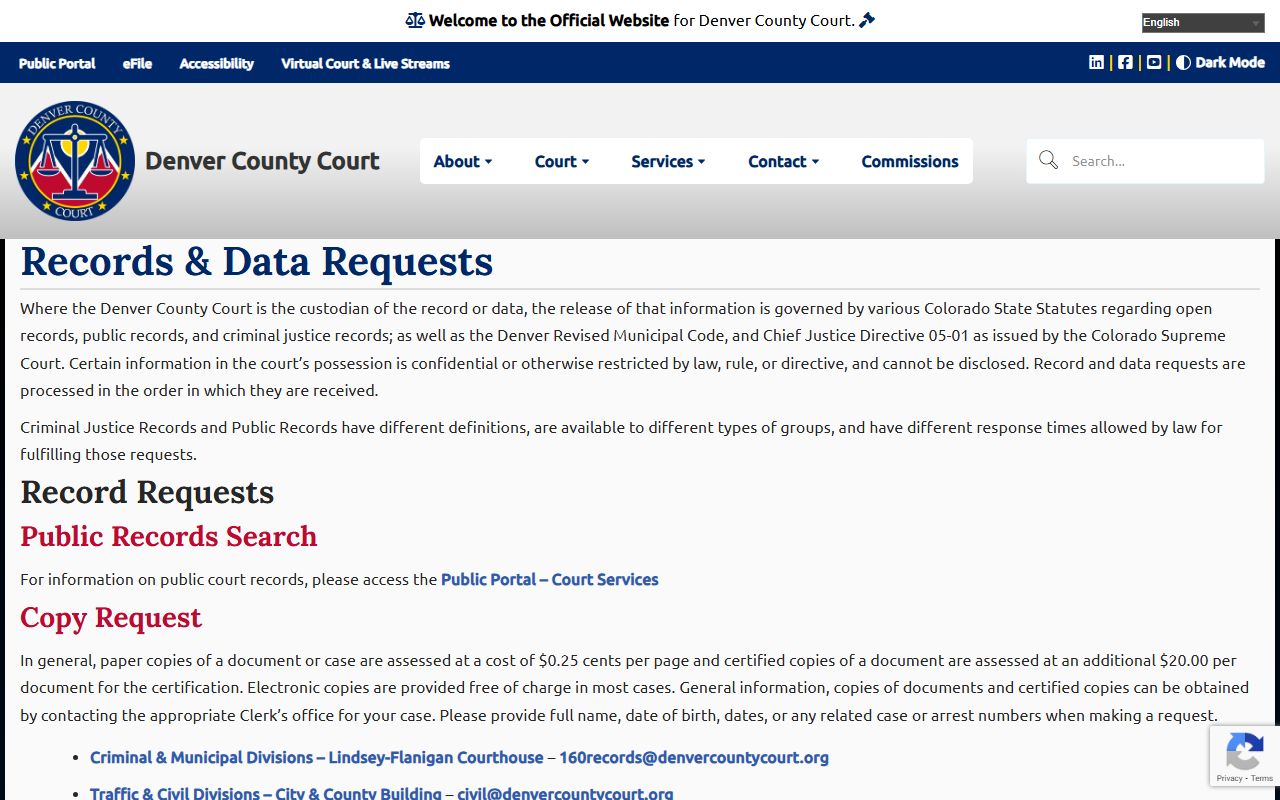
Steps to search Denver traffic cases online:
- Visit the public portal at public.denvercountycourt.org
- Select case search from the menu
- Enter your name or case number
- Review the search results
- Click your case for detailed information
- Note hearing dates and payment deadlines
The portal also allows online payments. You can pay fines with a credit card. Payments post immediately. This clears many violations. You get a receipt by email. Save this for your records. Some cases require court appearances. The system shows if you must appear in person.
For official copies of Denver Traffic Court Records, email coradatarequests@denvercountycourt.org. Include your case number and contact information. There may be fees for copies. The court responds within a few business days. Certified copies cost more than plain copies.
Types of Denver Traffic Court Records
Denver Traffic Court Records include comprehensive documentation. The county court maintains detailed files. Each case generates multiple record types. Understanding these helps you find what you need. Records are retained for years after cases close. Both digital and paper files exist.
Citation records start every traffic case. An officer files a citation after a stop. This document details the alleged violation. It includes date, time, and location. Officer observations appear here. Citations become part of the permanent court file.
Court filings include motions and responses. Drivers may contest tickets. Attorneys file motions. Prosecutors respond. Judges issue orders. All papers become public records. They track the case progress. These filings show legal arguments.
Judgment records document final outcomes. This could be a guilty verdict. It might be a dismissal. Plea agreements appear here. The judgment lists fines and penalties. Points assessments are noted. License suspensions are recorded.
Denver Traffic Court Records typically contain:
- Traffic citation details and violation codes
- Court hearing dates and locations
- Judge or magistrate assignments
- Final judgments and sentencing terms
- Payment records and compliance status
- DMV point assessment information
Payment records track all financial transactions. Courts log when payments arrive. They note payment plans. Community service completions appear here. These records prove compliance. They are essential for clearing license holds.
Denver Traffic Laws and Violations
Denver traffic violations follow Colorado state law. The county court applies these statutes. Violations carry various penalties. Classification affects your driving record. It determines fines and possible jail time. Understanding classes helps you respond properly.
Under CRS 42-4-1701, traffic offenses have classes. Class A infractions carry DMV points. These include speeding and red light violations. Class B infractions have no points. Both require fines. Denver County Court handles all classes.
The DMV Point System under CRS 42-2-206 tracks drivers. Adults face suspension at 12 points in 12 months. Younger drivers have lower limits. Points stay on records for years. Insurance companies check them. Accumulating points raises premiums.
Failure to pay penalties brings consequences. Courts issue warrants. They suspend licenses. Additional fees accrue. Address citations promptly. Payment plans are available. Contact the court to arrange terms. Ignoring tickets makes matters worse.
Common violations in Denver include:
- Speeding on city streets and highways
- Running red lights and stop signs
- DUI and DWAI offenses
- Driving without insurance
- Expired registration
- Reckless driving
Note: Serious violations may require court appearances. Paying online is not always an option. Check your citation carefully.
Resolving Denver Traffic Court Cases
Denver offers multiple ways to resolve Denver Traffic Court Records. Paying fines is the simplest option. This admits guilt. Points may apply. Requesting a hearing lets you contest the ticket. A judge hears evidence. Both options have deadlines. Act quickly to protect your rights.
Online payment is available through the public portal. Use a credit card or debit card. Payments post immediately. You get an email confirmation. Save this receipt. Some cases qualify for payment plans. Call the court to inquire. Low-income defendants may seek fee waivers.
Contesting a ticket requires a court date. Request this through the portal or by phone. The court schedules a hearing. You can represent yourself. You may hire an attorney. Bring evidence to support your case. Witnesses can testify. The judge decides after hearing all evidence.
Defensive driving school sometimes reduces points. Denver may offer this option. Not all violations qualify. Complete an approved course. Submit proof to the court. This can prevent insurance increases. Ask the clerk about eligibility.
Options for resolving Denver traffic cases:
- Pay fines online through the public portal
- Request a court hearing to contest charges
- Apply for a payment plan if unable to pay in full
- Complete defensive driving for point reduction
- Seek legal representation for complex cases
Warrants issue for missed court dates. Take citations seriously. The court works with responsible parties. Early communication prevents problems.
Colorado Resources for Denver Drivers
State resources complement Denver Traffic Court Records access. These tools provide broader information. Use them alongside the Denver portal. Together they offer complete coverage. Denver drivers benefit from both city and state systems.
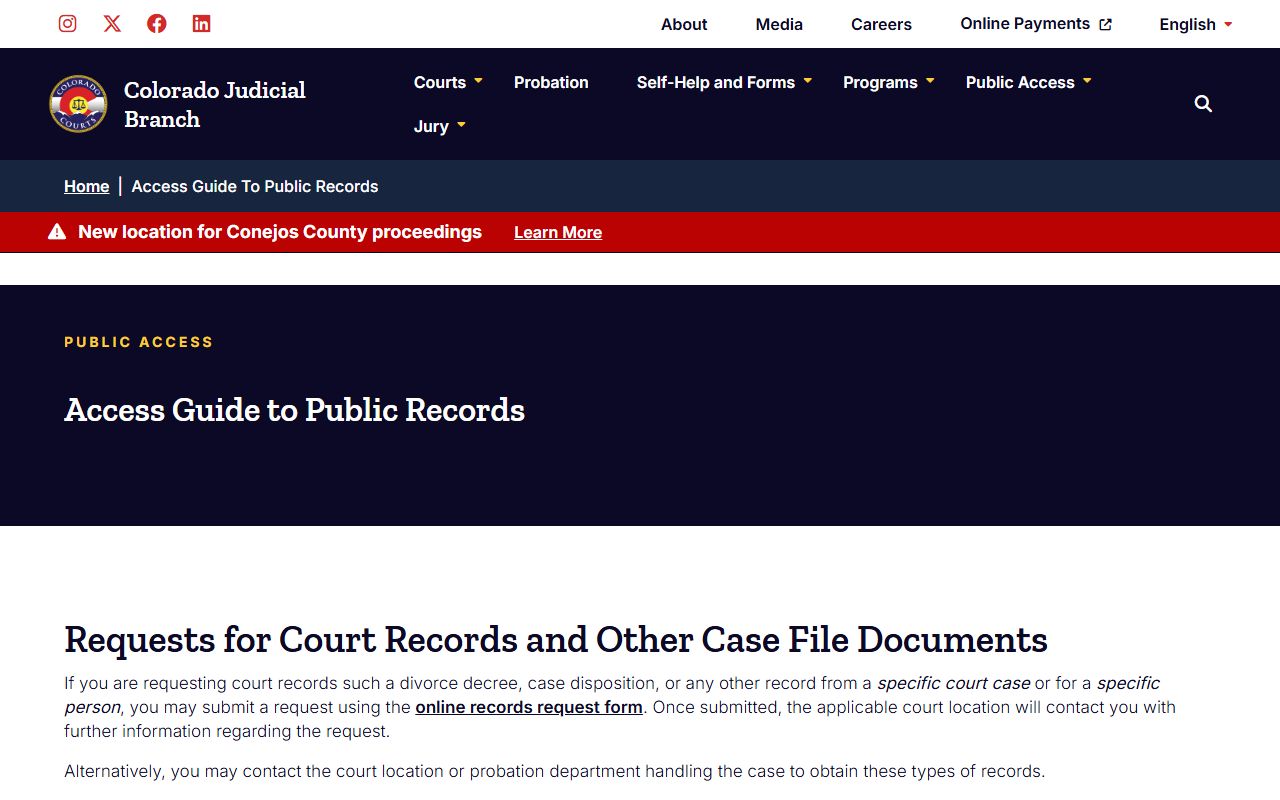
The Public Records Access Guide explains statewide procedures. It covers all Colorado courts. Fees and timelines are detailed. Some records have restrictions. The guide clarifies your rights. It applies to Denver County Court too.
For driver license matters, contact the Colorado DMV. They track points statewide. The DMV website offers online services. Check your driving record there. Monitor points from Denver violations. This helps maintain your license.
The Colorado State Patrol handles highway enforcement. Their citations go through county courts. Denver County Court processes these for incidents within city/county limits. Understanding jurisdiction helps you find the right court.
Denver County Traffic Court Records
Denver is a consolidated city and county. Denver County Court serves both jurisdictions. All Denver County traffic cases go through this court. The county and city share the same boundaries. For more information on Denver County traffic records and additional resources, visit the county page.